Saturday, February 28, 2009

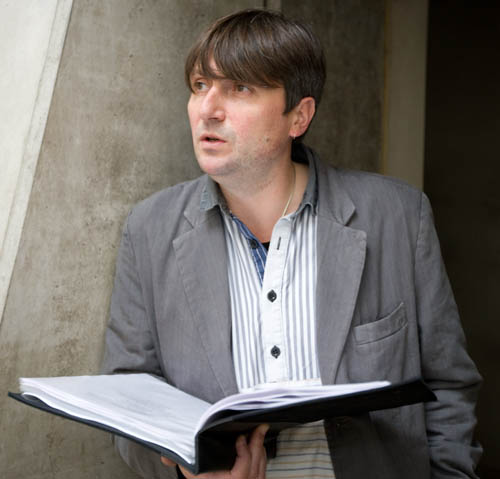
Vendler on Armitage


Helen Vendler has written a lengthy review of Simon Armitage's latest book, Tyrannosaurus Rex Vs. the Corduroy Kid. The review, and especially the book, which was published by Anansi hereabouts, are both worth a good look. Of younger (sub-50) poets working in English, Armitage is one of the few bona fide contenders for the mantle of major poet. I haven't read all his books, but each of the four books I've read has amazing poems in it. There are very few poets with the combination of craft, vision and civic engagement possessed by Armitage. Vendler says something about hoping his popularity won't prove too distracting. I don't think it's a real concern with him, somehow; if he was going to get a big head, it would've happened by now.

Thousands of Poets We Just Can't Do Without

Friday, February 27, 2009

Best Poetry Book Title...

...and cover image combo EVER.

The Essential Don Coles (The Porcupine’s Quill)

Edited by Robyn Sarah - 64 pages, sewn paper, $10.95

"All those things which we require of poetry – intelligence, illumination, pleasure in the placing of one surprising word beside another, sudden unexpected deepenings of feeling – all these are present in Don Coles' fine poems... Furthermore, they are rich in content as well as in reflection, and in those qualities which we admire in our fellow humans as much as we do in literature: tenderness, affection, humility, respect, courage."

- Carol Shields

The Essential Poets series aims to provide the best possible introduction to a preeminent Canadian poet, by selecting poems that carry the essence of an individual poetic sensibility as it evolves over time. Each volume includes an editor’s foreword, a bibliography, and a thumbnail biography of the poet. The series is based on the ‘less is more’ premise that a smaller selection of poems fosters deeper reading and re-reading, and that the full pleasure of poetry is to be found in the poems one has lingered over and lived with for a while.

Toronto Launch on Tuesday, March 24

5:30 – 7:30 p.m. at Ben McNally Books, 366 Bay Street

Please join us if you can. And please forward to Toronto-area friends who might be interested.

To order book: Ben McNally (416) 361-0032

or direct from The Porcupine’s Quill (519) 833-9158

Thursday, February 26, 2009

I was going for something along the lines of "The Villainous Poetry Critic"

...but apparently they don't make super heroes that lame.


THIRTEEN WAYS OF LOOKING AT A COWBIRD

I
Among twenty lowing Holsteins,
The only moving things
Were the flies and the cowbird.

II
I was of three minds,
Like a nest
In which there are six eggs.

III
The cowbird whirled in the autumn winds.
It was a small part of the pantomime.

IV
A male cowbird and a female cowbird
Are one.
A male cowbird and a female cowbird and a finch
Are one.

V
I do not know which to prefer,
The beauty of inflections
Or the beauty of innuendoes,
The cowbird screaming
Or just after.

VI
Icicles filled the long window
With barbaric glass.
The shadow of the cowbird
Was nowhere to be seen.

VII
O thin men of Haddam,
Why do you imagine golden birds?
Do you not see how the cowbird
Pecks around the feet
Of the cattle about you?

VIII
I know noble accents
And lucid, inescapable rhythms;
But I know, too,
That the cowbird isn’t involved
In what I don’t know.

IX
When the cowbird flew out of sight,
It sought the edge
Of one of many nests.

X
At the sight of cowbirds
Flying in a green light,
Even the bards of phony
Would cry out sharply.

XI
He rode over Connecticut
In a glass coach.
Once, a fear pierced him,
In that he mistook
The shadow of his equipage
For cowbirds.

XII
The river is moving.
The cowbird must be fleeing.

XIII
It was evening all afternoon.
It was snowing
And it was going to snow.
The cowbird sat
In Mexican cedar-limbs.

Wednesday, February 25, 2009

John Cooper Clarke - Chickentown 2

Et une autre...

John Cooper Clarke - Chickentown

Another version of this poem, a bit cleaner than the one I've got. And a whole lot quicker.

Evidently Chicken Town

In celebration of Freedom to Read Week, I thought I'd read you a fucking poem:

Mucking about with software and mic

Red in Tooth and Claw

In case you think the poetry reviewing world is cut-throat...

Monday, February 23, 2009

Une Pensée

Negative Review: n. Critical writing in which the text is white and the background black.

David Orr on Greatness

Here is the essay by David Orr quoted in the negative review discussion I posted. The whole thing is well worth a read.

Orr's piece reminds me of another favourite poet of Ashbery's--and of mine--John Clare, a poet in many ways similar in sensibility to Elizabeth Bishop: a poet who values a close look at a small thing more than the windy effusions of ego favoured by his elder contemporary, Wordsworth the Great. (Not that Clare couldn't turn on the rhetoric when he wanted to.) The ambition is more humble, and for a long time Clare's work was neglected and ignored, or dismissed as quirky. But lately he seems to be one of the most talked-about of the Romantics. He's certainly my favourite. I think he's pretty great. Bishop too.

I think Orr's a bit too broadstroke about Lowell. Like Ashbery, Lowell wrote a great many disposable poems. But he did leave behind a fair clutch of amazingly good work, too. The little Selected published by Faber, edited by Michael Hoffmann, is probably a better place to read Lowell than in his doorstopper of a Collected.

UPDATE: A roundup of responses to Orr's article. But really, I'm just linking to this for the video.

Sunday, February 22, 2009

Call to Arms

Okay, so regular readers of CLM know that yours truly isn't exactly bleeding heart about funding for the arts. I believe that the government of a democratic society should provide financial support for unremunerative artistic endeavours, but I dislike many of the ways in which said funds are disbursed, and I dislike the self-absorbed sense of entitlement evinced by a good many soi-disant artists who seem to think they are owed a living.

I also dislike the rather naive argument routinely trotted out when funding cuts happen or are threatened: that the arts are good for the economy. Why do I dislike this? Because only some arts are good for the economy; if we're going to determine funding on a case by case basis in terms of potential return on investment, a lot of the things we value would get zip, zero, zilch.

Something I learned of today confirms that I'm right about this. Quill & Quire reports that a new rationalised funding programme for magazines introduced by the Heritage dept. of the Conservative government will result in mags with fewer than 5000 subscribers getting no funding. That will include every literary magazine in the country. Some of these mags probably shouldn't be receiving as much moola as they do, but this has nothing at all to do with their subscription base. This is absolutely the wrong way to go about redistributing the monies allotted to magazines.

CNQ, the magazine I work for, will lose $10,000, according to the publisher. They already don't have enough money in the budget to pay me for my editorial work. A hit like that will drastically affect the way the magazine operates. It will affect production values, frequency, page count, contributor payments, etc.

Fortunately, these new guidelines are not in effect yet and there seems to be some optimism that the Heritage dept. can be headed off at the pass. A quick, strong and broad response is needed. Write to the Minister. Write to your MP.

Wednesday, February 18, 2009

More Awards Shenanigans

So the Commonwealth Prize shortlists have been announced. One of the Canadian authors shortlisted is married to one of the judges. Can't wait to hear about how this isn't a conflict of interest.

UPDATE: Thanks to Steven Beattie for posting this link. Apparently, Dr. Banting had nothing to do with Mr. Stenson's book being on the shortlist and will have nothing to do with whether it wins or loses. Prize administrator Jennifer Sobol has been quoted as saying you can "stick a needle in [her] eye" if this ain't so.