I is on Verse Daily
No, that's not bad grammar, it's a fact. My poem "I" is featured on Verse Daily.
No, that's not bad grammar, it's a fact. My poem "I" is featured on Verse Daily.

In the issue are two essays I'm very proud of. One is a memorial for my late friend Elise Partridge, focused squarely on her poetry. I wish she was still here to read it. I hope you read it, but more than that, I hope you read her poetry.
The other piece is a longer essay on the works of Lisa Robertson. It's a greatly abridged version of a piece too long for Arc to print whole, but I hope to polish up and publish the long version in the not-too-distant future. Still, I think the piece as published is a pretty good minority take on Robertson's relationship to the canon of English poetry.
The mag has some other good-looking content, including the always-sharp Sarah Neville on Jeramy Dodds' version of the Edda and a rave review of Kerry-Lee Powell's Inheritance, written by Phoebe Wang.


Got home yesterday from a five-city book tour. I've made recordings of three of the launches; two others were taped by other folks in Kingston and Hamilton. The latter, featuring readings by Robyn Sarah, Don McGrath (reading his translations of Robert Melancon) and myself, has been posted by Adrian Hoad-Reddick.
My review of Garth Martens' debut collection, Prologue for the Age of Consequence is now up at the Arc Poetry Magazine site.
My poem, "The Wound," from my brand new book, is the Sunday Poem over on the Vehicule Press Blog.
A promotional piece I wrote for the Literary Press Group's "All Lit Up" blog has just been posted. Not something I usually do: a)a promo article and b)write about prose fiction. But these are four really enjoyable collections of not-quite-usual stories, so I was glad to have the chance to shed a bit of virtual ink on them.

Not consistent, but in
clusters, in lacustrine
conglomerations, in lack
lustre congress, in lacunar
conundrums, drums
con sordino, in schools
of sardine shoaling
in shallows, in shadows
and splotches of sickled
shivelight, in shimmers
and speckles, in specks,
freckles and moles, in tunnels
and tubes, in tubs and tubas
and turbines, in turbot's
turbercles, in tubercular
fits, in fletches, flitches
and flits, in flatlands
and mesas, in ditches,
in dikes, in tidal insistence,
in bridles and britches,
in fasces and faces, in flashes
and flexes and fluxion, in fluent
dysrhythmia, flaring
and falling, setting fire
to synapses and scuttling
sense to its apsis.
Counting syllables really trained me to carry my ear down to that micro level of attention. I spend a lot of time counting syllables. For a while I had to stop myself from counting syllables when people spoke.
Brian Campbell has reviewed Career Limiting Moves, the book, for Rover Arts. Check it out.

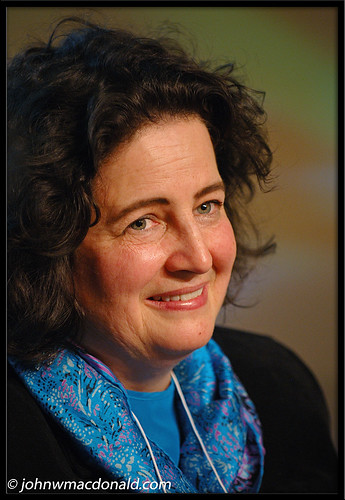 I learned yesterday that my dear friend Elise Partridge has died. I knew her time was running out--I'd known it for almost a year--but I was really hoping she'd hang in long enough to see her final book come off the press this spring. Knowing this was coming in no way makes it less painful for those who knew and loved her--for me--but given how much pain and suffering she'd already been through, there is some comfort in the thought that she need endure no more of it.
As word got out about Elise's death on social media yesterday, many people wrote of how kind she was. And she was. Elise wasn't that awful thing--a "nice" person--she was a person of great spirit, authentically generous in a way that no nice person is. I first met her, briefly, in March 2006, when I did a reading in Vancouver. She introduced herself to me after the reading, said a few enthusiastic words and, as I recall, left precipitously. She seemed unaccountably anxious. Not long after, I had an email from her apologizing that she was "ridiculously shy when meeting new people." She said a few lovely things about my poems and about my review work. And her comments weren't merely perfunctory compliments, of the sort one encounters all too often in any collegial environment, but the kind of sharp, perceptive observations that can only be the product of thoughtful attention. Not long after that, Elise wrote to offer me a complimentary subscription to the London Review of Books, a perk her husband Steve (a medievalist in the UBC English department) had acquired in exchange for writing a review for LRB. She thought, rightly, that the high quality long-form reviews in LRB would appeal to me.
When I moved to Vancouver from Halifax the following year, Elise did more than any other person (outside of Rachel's family) to welcome me to the city. She invited me to become a member of the Poetry Dogs, a semi-regular reading circle that would meet at a member's house to discuss whatever poems people had brought along. Members, besides Elise and Steve, included Barbara Nickel, Stephanie Bolster, John Donlan, George McWhirter, Christopher Patton and, later, Matt Rader. The only condition was that they had to be someone else's poems, someone not a member of Dogs. It was in Dogs sessions that I really learned how acute and uncompromising a reader Elise was. Anyone who came under her tutelage--as when she was poet-in-residence for Arc Poetry Magazine--could only have come away with their poems much improved.
Elise was someone who was more intimate with death than anyone in the First World should have to be, but something that distinguished her personality, and the poetry that was so much a product of it, was her refusal to be gloomy in the face of death. She would never have agreed with Larkin that "death is no different whined at than withstood." And she never succumbed to despair. Her oeuvre is full of poems about death, but they are playful, virtuosic poems, acts of resistance, testament to the size of her spirit, the defiance of her breath.
In an early email to me, she was irked by a reviewer who had "insulted [her] character and artistic integrity by charging [her] with 'trying to dazzle.'" She ended that letter with a piece of advice for me: "If you ever get slandered with the show-off label, my suggestion is to reply, 'I'm not TRYING to dazzle--ah just DOES!'" And she did. I miss her already, but she has left so much behind.
The index of a vintage
is the season's history: how many
photons have fallen
through the skin. Equations
predict excellence. Unlike
the nose of connoisseurs,
the maths involved
are flawless, however
maculate the soil.
Deprive the vine of water,
it will eke its taproot deeper
down through solid strata
where it draws not only
succour for the turgor
of its foliage and fruit,
but hauls up half-formed
metaphors from minerals
lying latent in the clay,
imparts them to the grape
flesh where they mingle
and intensify as the sun-
washed clusters ripen.
These metaphors remain
embryonic until tongue
-cognized and -constituted
by a seasoned sommelier
who nearly knows them flawlessly.
The index of a vintage,
however reason may explain it,
retains intrinsic mystery—
the grape escapes its proof.
As it very seldom happens that the rage of extemporary criticism inflicts fatal or lasting wounds, I know not that the Laws of benevolence entitle this distress to much sympathy. The diversion of baiting an author has the sanction of all ages and nations, and is more lawful than the sport of teasing other animals, because for the most part he comes voluntarily to the stake, furnished, as he imagines, by the patron powers of literature with resistless weapons and impenetrable armour, with the mail of the boar of Erymanth, and the paws of the lion of Nemea.-Samuel Johnson